After a year of legal shifts and a deliberate slowdown in 2025, the WordPress community has been waiting for this moment. The roadmap for WordPress 7.0 is finally clear, and it’s not just another version update—it’s the definitive launch of Phase 3 of the Gutenberg project, focused entirely on collaboration and workflows . Scheduled for release on April 9, 2026, WordPress 7.0 is set to redefine how teams build websites together, moving from a “solo editor” model toward a shared, real-time creative environment .
If 2025 felt quiet for the world’s most popular CMS, you were right. But now that we’re in 2026, the engine is humming again. This article breaks down everything you need to know about WordPress 7.0, from its key features and technical shifts to how it will change your daily workflow.
Table of Contents
The Official WordPress 7.0 Release Schedule
To prepare your sites and clients for the transition, you must note the key dates in the WordPress 7.0 release calendar. The release squad aimed for a spring launch to align with major community events like WordCamp Asia .
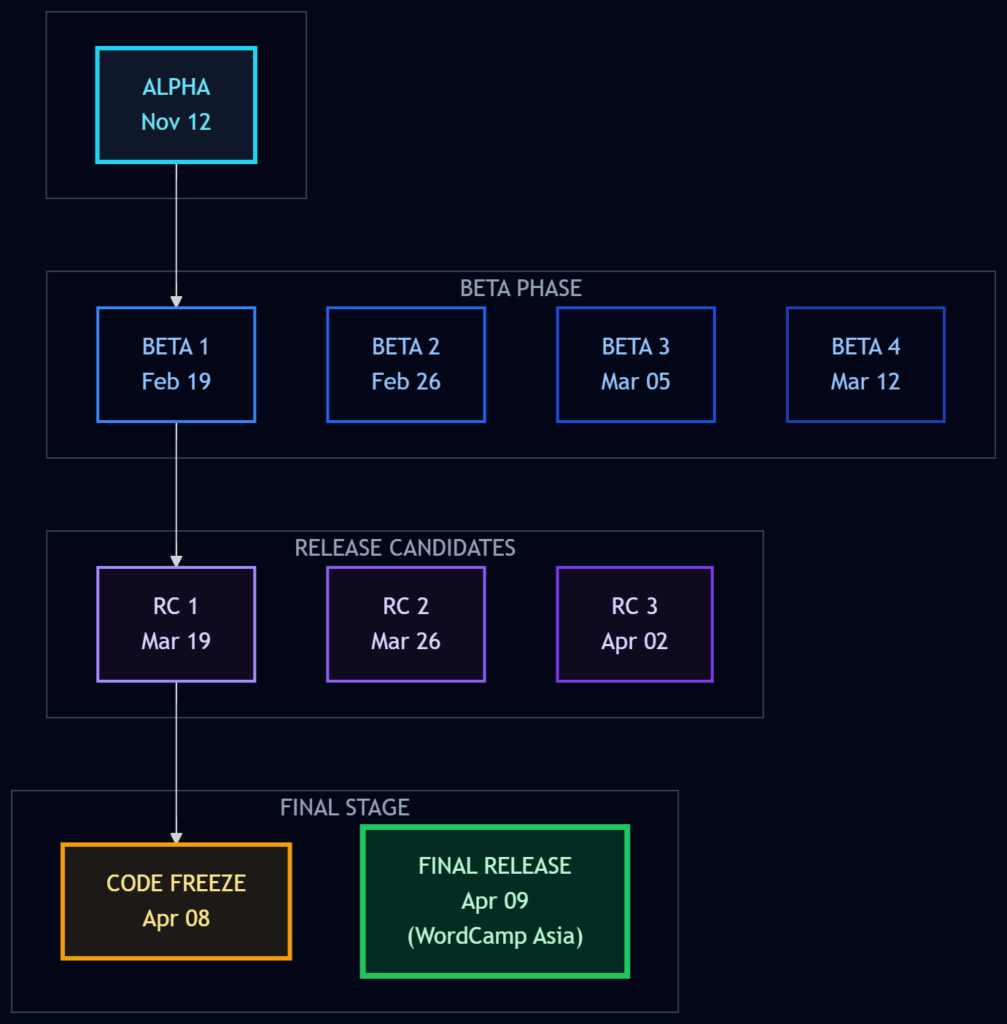
This timeline is strategically positioned to give the community roughly seven weeks between Beta 1 (February 19) and the final launch for testing . Following the slowdown of 2025, WordPress is also returning to a three-release cadence, with WordPress 7.1 tentatively scheduled for August 19, 2026, and WordPress 7.2 expected around December 8–10, 2026 .
Why Did It Take So Long? The 2025 Context
It’s impossible to discuss WordPress 7.0 without acknowledging the hurdles of 2025. Originally, the community expected three major releases that year. However, a combination of legal battles and a temporary pause in contributions from major stakeholders like Automattic led to a deliberate slowdown . Project leadership chose to prioritize stability and governance over rushed features. This resulted in WordPress 6.9 in late 2025, which served as a “stabilizer” to clear technical debt . Because of this intentional pause, WordPress 7.0 arrives in 2026 with a much more polished and tested foundation, representing a “quality over quantity” approach that developers have been requesting for years.
What is New in WordPress 7.0?
The core theme of WordPress 7.0 is “Workflows.” For years, WordPress was great for writing, but managing a team of writers, editors, and designers required a stack of third-party tools like Google Docs, Slack, and Trello. Version 7.0 aims to bring those collaborative interactions directly into the dashboard .
Here’s a summary of the major features you can expect:
| Feature Category | Key Addition | Practical Benefit |
|---|---|---|
| Collaboration | Enhanced Notes with @mentions, Fragment Notes, Suggestions Mode | Contextual feedback right in the editor, replacing email chains. |
| Editor Experience | Responsive Editing Mode, Pattern Editing, Block Design Tools | More control without code, fewer plugin dependencies. |
| Admin Interface | DataViews replacing WP List Tables | Modern, app-like content management with inline filtering. |
| Development | PHP-Only Block Registration, Block Bindings | Lowers barrier for developers, more dynamic content capabilities. |
| AI Integration | Abilities API and AI Client | Standardized way for plugins to integrate AI features. |
| System Requirements | Minimum PHP 7.4 (Recommended: PHP 8.3+) | Modern PHP for performance, security, and new features. |
Let’s explore each of these in more detail.
1. Collaboration Takes Center Stage: Notes & Real-Time Co-Editing
The first major piece of Phase 3 is a robust collaboration suite built directly into the block editor.
Enhanced “Notes” and Asynchronous Collaboration
What it is: A full inline commenting and feedback system. While a basic version appeared in WordPress 6.9, version 7.0 expands this into a full communication suite .
- Fragment Notes (Inline Comments): Instead of commenting on an entire block, you can select specific text within a paragraph and leave a note on just that selection.
- @Mentions Support: Need to loop in a teammate? Simply @mention them in a note, and they’ll receive an email or dashboard notification .
- Suggestions Mode: Reviewers can propose edits tied to specific content within a block, which authors can accept or reject with a click .
💡 What this means for you: Think about how your team currently handles design feedback. Someone takes a screenshot, pastes it into an email or Slack, and the designer has to figure out which element the feedback refers to. With Notes, that conversation happens exactly where the content lives—no screenshots, no context switching. For agencies managing client content approvals, this alone could eliminate an entire layer of back-and-forth.
Real-Time Collaboration: The Infrastructure Hurdle
The “holy grail” of Phase 3 is real-time co-editing, where multiple users can edit a post simultaneously and see each other’s cursors . The editor mechanics for this are relatively mature, but unresolved questions remain around server infrastructure and hosting variability .

As shown in the diagram, the default sync mechanism uses HTTP polling, which works on any standard hosting. For lower latency, hosting providers can implement WebSocket support . However, making it universally accessible across WordPress’s diverse hosting landscape remains a challenge. Consequently, WordPress 7.0 may ship real-time features as “experimental” or limited to specific environments .
2. A More Powerful and Intuitive Editor
WordPress 7.0 introduces several improvements that give editors more control without touching code.
Responsive Editing Mode
What it is: Show or hide specific blocks based on device screen size, directly inside the editor, no CSS or plugins required .
💡 What this means for you: Before this, showing a different layout on mobile required custom CSS or a plugin. Now, an editor with zero coding knowledge can handle this from within the block editor, handing more control back to clients and reducing support requests.
Pattern Editing, Spotlight & Isolated Editor Mode
What it is: A redesigned, less confusing way to edit synced patterns and template parts without losing your place .
- Isolated Editor Mode: Lets you edit synced patterns inline, right where you are, without navigating away from your current page.
- Spotlight Mode: Dims everything else in the editor to focus your view on a single pattern or note at a time.
This is especially useful for managing global elements like headers or footers built as synced patterns, making edits faster and reducing mistakes.
Block Design Tools & Supports
WordPress 7.0 ships new design tools natively, reducing the need for page builder plugins for common tasks .
- Text line indent: Add indentation to paragraphs without writing CSS.
- Text column support: Flow a single paragraph across multiple columns (like a newspaper layout) without a plugin.
- Aspect ratio controls: Lock wide or full-width images to a specific ratio so they never look stretched.
- Dimension presets: Pre-defined spacing values for consistent layouts across the site.
3. The Modern Admin Redesign (DataViews)
The WordPress dashboard has largely looked the same for over a decade. WordPress 7.0 introduces the most significant visual and structural change to the back-office in years through a system called DataViews .
This modernizes how you view and manage content:
- Post and Page lists are replaced with a flexible, app-like interface.
- Filter, group, and sort content without page refreshes.
- Multiple layout options: table, grid, or list views.
- Persistent views that remember your preferences.
⚠️ Important Note for Developers: This is the highest-risk compatibility change in 7.0. Any plugin that hooks into or modifies the existing
WP_List_Tablefor Posts, Pages, or Media may break and will need an audit before upgrading .
4. Laying the Groundwork for AI Integration
WordPress 7.0 is not trying to be an AI writer itself. Instead, it’s building the infrastructure that allows AI to work better within the CMS .
The Abilities API and AI Client
The new Abilities API acts as a bridge. It provides a standardized way for AI services to understand what a specific WordPress site is capable of doing . Rather than hard-coding connections to specific AI models, WordPress is creating an “AI Client” within the core.
This means plugin developers can build AI features that are consistent across the entire platform. Whether you’re using AI to generate alt text for images, suggest SEO improvements, or automate content workflows, these tools now have a native, secure way to communicate with WordPress core .
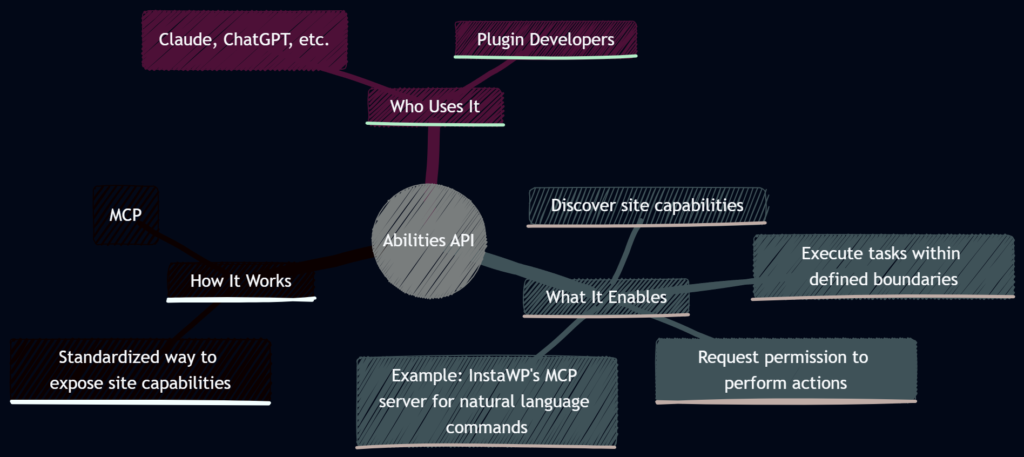
This isn’t theoretical. WordPress MCP integrations are already emerging across the ecosystem, allowing AI assistants to manage content and execute WordPress tasks through natural language commands .
5. New Blocks and Block Improvements
WordPress 7.0 ships with new native blocks and enhancements to existing ones:
- Breadcrumbs block: Adds hierarchical navigation trails (e.g., Home > Category > Post) to any template without a plugin .
- Icons block: Insert scalable icons directly into content or layouts .
- Heading Block as Block Variations: Heading levels (H1–H6) are now proper Block Variations, meaning you can insert “Heading 2” directly from the block inserter with its own icon and style .
- Gallery, Grid, and Cover Block Improvements: The Gallery block now supports a lightbox mode. The Grid block gets responsive layout support, and the Cover block allows embedded videos as backgrounds .
6. Developer-Focused Changes
WordPress 7.0 brings significant shifts for developers, aiming to lower barriers and modernize the stack.
PHP-Only Block Registration
Developers can now register blocks using only PHP; no React, no Node.js, no build toolchain required . This is a game-changer for traditional PHP WordPress developers who have avoided block development due to the JavaScript toolchain. You write your block in PHP, and WordPress automatically generates the inspector controls.
Block Bindings and Pattern Overrides
This system, which connects block content to dynamic data sources (like post meta or custom fields), is expanded in 7.0 to support custom dynamic blocks more reliably . This is the foundation for building truly data-driven templates inside the block editor.
Editor Isolation and Iframing
To ensure site styles don’t leak into the editor (and vice versa), WordPress 7.0 moves toward full iframing of the editor canvas. This creates a sandboxed environment for content editing, making WYSIWYG significantly more accurate . For developers, this means a clearer separation of concerns, but it also requires testing how theme styles render in the new isolated environment.
🔧 Technical Deep Dive: Minimum PHP Version Bump
The core team has proposed raising the minimum supported PHP version to 7.4 . This is necessary to support the modern libraries required for collaboration features and AI APIs.
Why this matters:
- PHP 7.4 enables more consistent typing, making the codebase easier for both developers and AI tools to understand.
- Many third-party AI SDKs already require PHP 7.4 or higher.
- WordPress can adopt modern PHP features that improve performance and security.
Recommended action: If your sites run PHP 7.2 or 7.3, upgrade to PHP 8.2 or 8.3 now. Don’t wait until April. Test the upgrade thoroughly using a staging environment before touching production. PHP 8.3 is the current recommended version for best performance and security .
What WordPress 7.0 Means for Different Roles
This release has distinct implications for various members of the WordPress ecosystem.
| Role | Key Implications | Action Items |
|---|---|---|
| Site Owner / Editor | New collaborative tools, more design control without code, modern admin feel. | Test new features (Notes, Responsive Editing) on a staging site. Plan team training on new workflows. |
| Plugin Developer | New APIs (Abilities, AI Client), PHP-only blocks, DataViews compatibility. | Audit plugins, especially those modifying admin list tables. Explore AI integration via the new APIs. |
| Theme Developer | Editor iframing changes, no new default theme, focus on block theme patterns. | Test theme styles in the iframed editor. Leverage Style Variations and new design tools. |
| Agency / Freelancer | More native features reduce reliance on third-party tools, streamlined client collaboration. | Update development workflows. Use the beta period to test all client plugins and themes. |
A Pre-Launch Checklist for April
Between Beta 1 (February 19) and launch (April 9), you have a crucial window to prepare. Here’s a checklist to ensure a smooth transition:
- Check Your PHP Version: Ensure you’re on PHP 7.4 at minimum; PHP 8.2 or 8.3 is strongly recommended .
- Audit Admin-Modifying Plugins: Anything touching Posts, Pages, or Media list views is at risk with the DataViews migration. Test thoroughly .
- Test Editor Styles: The iframed editor may render things differently. Check how your theme’s styles appear in the new editing environment.
- Experiment with Notes: Set up a sandbox site and run your team through a real feedback workflow to see how it replaces your current process.
- Read the Field Guide: Published around March 19, it will contain all Developer Notes for deprecated functions and breaking changes.
Final Thoughts: A Foundation for the Next Decade
WordPress 7.0 is more than a collection of features—it’s a signal that the platform is maturing. The focus on collaboration and infrastructure shows WordPress is ready to compete with modern “closed” platforms while maintaining the freedom of open source .
By moving away from frantic release cycles and focusing on a coordinated, stable approach in 2026, the WordPress project is ensuring its longevity. Whether you’re a solo developer or managing sites for a large-scale agency, the improvements in version 7.0 will make your daily workflow faster, more communicative, and more modern.
As we look toward April, the message is clear: the future of WordPress is collaborative. It’s time to stop building in isolation and start building together.
References:
FAQs
When is the official release date for WordPress 7.0?
The final version of WordPress 7.0 is scheduled to be released on April 9, 2026. This date was chosen to line up with WordCamp Asia, a major community event. Before that, there will be beta versions available starting in February for testing.
What is the main focus of this update?
The biggest focus is collaboration. This update launches “Phase 3” of the Gutenberg project. The goal is to make it easier for teams to work together directly inside WordPress, similar to how you might collaborate in Google Docs, rather than relying on emails or external chat apps to manage feedback.
Do I need to change my hosting or PHP version?
Most likely, yes. WordPress 7.0 is raising the minimum requirement to PHP 7.4. If your server is still running an older version like PHP 7.2 or 7.3, you will need to upgrade. However, for the best speed and security, the team recommends updating to PHP 8.3 if possible.
Is there a new default theme included?
No, there is no new “Twenty Twenty-Six” theme this time. The team decided to focus on making the existing block themes more powerful instead of releasing a new one. They want to show users that they can update their site’s look using the Site Editor tools without needing a brand new theme every year.
Does WordPress 7.0 have built-in AI writing tools?
No, WordPress 7.0 will not write content for you. Instead, it introduces an “Abilities API” and an AI Client. Think of this as building a standardized bridge. It makes it much easier for plugin developers to add AI features (like content suggestions or image generation) that work smoothly with your site, but the AI itself comes from plugins you choose to install.
Can multiple people edit the same page at the exact same time?
Yes, but with a small note. This is the “holy grail” feature called real-time co-editing. It allows two people to work on a post simultaneously and see each other’s changes live. However, because this requires specific server technology, it might be labeled as “experimental” at first or depend on whether your hosting provider supports the necessary connection speeds.
What exactly is the “Notes” feature?
The Notes feature is like having a conversation right on top of your content. You can highlight a specific paragraph or block and leave a comment or suggestion for a teammate. You can even tag them using the @ symbol, and they will get a notification. It saves you from having to take screenshots or send emails back and forth.
Will my current plugins break if I update?
Most plugins should work fine, but there is a higher risk than usual with this update. The admin area is getting a major overhaul (switching to DataViews). If you have plugins that heavily modify the Posts, Pages, or Media list screens, they might need an update from the developer to work correctly. It is always safest to test on a staging site first.
What is DataViews and why does it matter?
DataViews is the name for the modernized admin interface. The old “list tables” that looked like a spreadsheet from 2005 are being replaced with a faster, app-like interface. You can filter, sort, and view your content in grids or lists without the page reloading constantly. It just makes managing your content feel much more modern and fluid.
Do I need to know how to code to use the new design tools?
No, that is the point of the new design tools. Features like Responsive Editing Mode let you hide or show blocks on mobile versus desktop without writing any CSS code. Other tools let you change layouts, like making text columns, directly in the editor. This gives designers and editors more power without needing a developer for small changes.